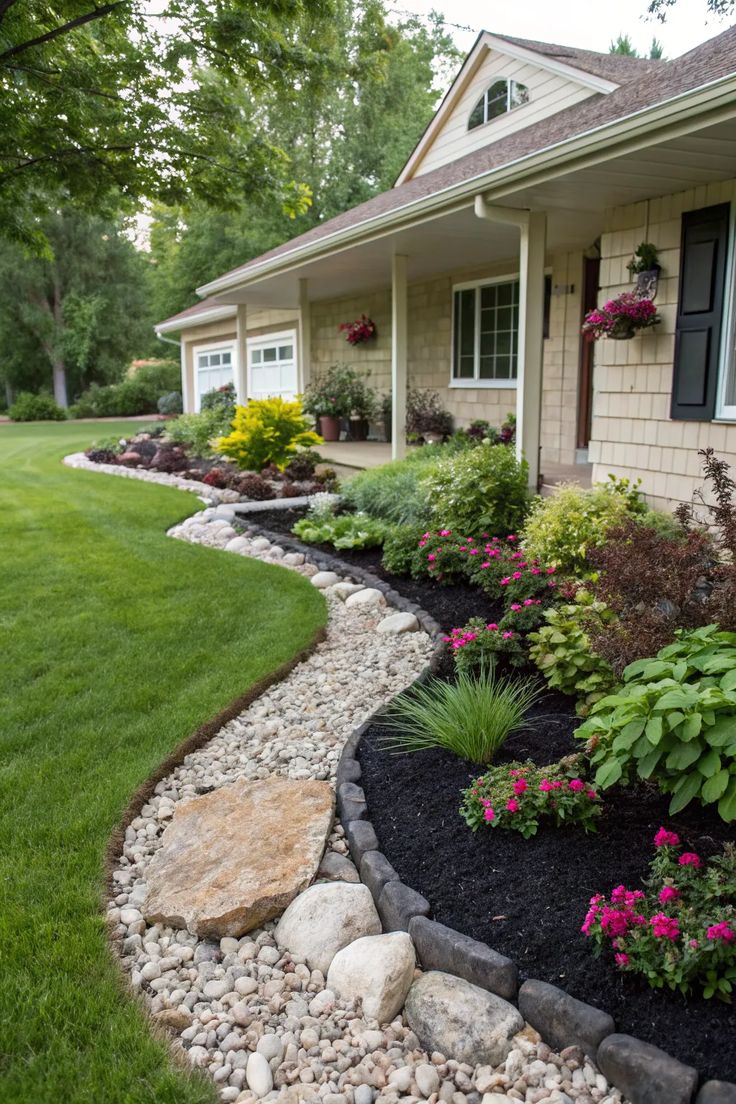
Ranch Style Front Yard Design Inspiration: Cultivating Curb Appeal with Timeless Charm
Ranch homes, with their iconic low-slung profiles, open floor plans, and deep connection to the outdoors, represent a beloved chapter in American architectural history. Often celebrated for their practicality, comfort, and unpretentious charm, these homes offer a unique canvas for landscape design. However, their sprawling, often linear front yards can sometimes feel challenging to design, leading to a missed opportunity to truly enhance curb appeal and reflect the homeowner’s style.
Far from being "plain" or "dated," a ranch home’s front yard is a blank slate waiting to be transformed into an inviting, stylish, and functional extension of the living space. The key lies in understanding and embracing the ranch aesthetic, then infusing it with thoughtful design principles that complement its horizontal lines and inherent simplicity. This article delves into a wealth of inspiration for crafting a ranch style front yard that not only welcomes you home but also becomes a true showstopper.
Understanding the Ranch Aesthetic: A Foundation for Design
Before diving into specific design elements, it’s crucial to grasp the core characteristics of ranch architecture:
- Horizontal Emphasis: This is perhaps the most defining feature. Ranch homes stretch across the landscape rather than soaring upwards. Your landscape design should echo and enhance this horizontal flow.
- Single-Story Layout: With no upper stories to consider, the roofline and the ground plane become dominant visual elements.
- Simple Lines and Forms: Ranch homes eschew elaborate ornamentation in favor of clean, straightforward construction.
- Connection to Nature: Large windows, sliding glass doors, and often a seamless transition to outdoor living areas are hallmarks of ranch design. The front yard should foster this connection.
- Often Generous Front Yards: Many ranch homes sit on spacious lots, offering ample room for creative landscaping but also posing the challenge of filling the space effectively without it feeling empty or overwhelming.
The goal for a ranch front yard is not to compete with the house but to harmonize with it, creating a cohesive and inviting visual statement that feels both natural and intentional.
Core Principles for Ranch Front Yard Design
With the ranch aesthetic in mind, here are fundamental principles to guide your design choices:
- Embrace the Horizontal: This cannot be overstated. Think low-profile plantings, wide pathways, linear beds, and elongated elements that draw the eye along the length of the house. Avoid anything that feels overly tall or vertically dominant right next to the house, as it can disrupt the architectural balance.
- Scale and Proportion: Ensure your landscape elements are proportionate to the house. A massive specimen tree right next to a modest ranch might feel out of place, whereas a carefully chosen smaller tree or a cluster of lower shrubs would be more appropriate.
- Simplicity and Clean Lines: Reflect the house’s inherent simplicity in your design. Overly fussy, complex, or cluttered landscapes can detract from the ranch’s charm. Opt for clear pathways, defined planting beds, and uncluttered open spaces.
- Layering for Depth: While emphasizing the horizontal, avoid a flat, two-dimensional look. Layering plants of varying heights, textures, and colors – from groundcovers to low shrubs, mid-height perennials, and strategically placed accent trees – creates depth and visual interest.
- Functionality First: Consider how you use your front yard. Do you need a clear path to the front door? A small seating area? Space for kids to play? Integrate these practical needs into your design.
- Sustainability and Low Maintenance: Many ranch homes were built in an era that valued practicality. Modern ranch landscape design often incorporates drought-tolerant plants, native species, and efficient irrigation systems, reducing water usage and maintenance demands.
Key Design Elements and Inspiration Categories
Now, let’s explore specific elements and thematic inspirations to bring your ranch front yard to life.
1. Pathways and Entryways: The Welcome Mat to Your Home
The path to your front door is the first impression visitors receive. For a ranch, it should be inviting, clear, and complement the house’s style.
- Materials:
- Pavers or Flagstone: Offer a classic, durable look. Lay them in a straight line or gentle curve, perhaps with a wider landing area at the front door.
- Gravel: Provides a softer, more rustic or Mediterranean feel, especially when edged with metal or wood.
- Poured Concrete: Can be modern and sleek, especially with interesting finishes (exposed aggregate, stamped patterns) or a clean, expansive slab.
- Wood Slices/Stepping Stones: Create an informal, naturalistic path, especially when set into groundcover.
- Design:
- Wide and Welcoming: Ensure paths are wide enough for two people to walk side-by-side (at least 4-5 feet).
- Gentle Curves: If your property allows, a subtle curve can add softness and guide the eye through the landscape.
- Linear Simplicity: For a more modern or minimalist ranch, a straight, clean path directly to the door can be striking.
- Borders: Edge paths with low plantings, river rock, or metal edging for a crisp, finished look.
2. Plant Selection: A Symphony of Textures and Colors
Planting is where you truly infuse personality and life into your ranch front yard. Focus on plants that thrive in your climate and complement the architectural style.
- Low-Profile Plantings: These are your best friends. Think groundcovers like creeping thyme, sedum, or mondo grass that spread horizontally.
- Shrubs: Opt for compact, evergreen shrubs that provide year-round structure without overwhelming the house. Dwarf conifers, boxwood, abelia, or low-growing junipers are excellent choices. For flowering options, consider dwarf hydrangeas, spirea, or roses in strategic spots.
- Ornamental Grasses: A staple for modern and drought-tolerant ranch landscapes. Varieties like ‘Karl Foerster’ feather reed grass, switchgrass, or blue fescue add movement, texture, and often beautiful fall color without significant height.
- Perennials: Inject pops of seasonal color with resilient perennials. Lavender, coneflowers, salvia, daylilies, and sedum are all great choices that require relatively low maintenance.
- Drought-Tolerant & Native Plants (Xeriscape): Especially popular in arid regions, this approach aligns perfectly with the ranch’s practical roots. Succulents (agave, aloe, sedum), cacti, native grasses, and Mediterranean herbs (rosemary, thyme) create a striking, water-wise landscape. Use gravel or decomposed granite as mulch.
- Accent Trees: If space allows, a small to medium-sized ornamental tree can add vertical interest without overshadowing the house. Japanese maples, dogwoods, or multi-stemmed crape myrtles are good choices, placed a comfortable distance from the foundation.
- Layering: Combine groundcovers, low shrubs, mid-height perennials, and a few taller accents to create visual depth. Ensure the tallest plants near the house remain below the roofline or eaves.
3. Hardscaping and Architectural Accents: Defining Space and Adding Structure
Beyond pathways, hardscaping elements provide structure, define spaces, and add functional beauty.
- Low Retaining Walls: If your property has a slight slope, low walls made of stone, brick, or concrete blocks can create level planting beds, adding visual interest and definition.
- Decorative Screens or Fences: For privacy or to delineate a specific area (like a small seating nook), modern slatted wood screens or sleek metal panels can be very effective and add a contemporary touch.
- Built-in Seating: A low-profile bench integrated into a retaining wall or a small patio can create an inviting spot to enjoy the front yard.
- Water Features: A simple, bubbling fountain or a sleek, linear water trough can introduce soothing sounds and a focal point without being overly elaborate.
- Boulders and Rocks: Especially in xeriscaped or naturalistic designs, strategically placed boulders can add a sense of permanence and texture.
- Statement Pottery: Large, architectural pots or a collection of smaller ones can house vibrant plants, succulents, or seasonal flowers, adding color and height where needed. Choose pots with clean lines to match the ranch aesthetic.
4. Lighting: Enhancing Ambiance and Safety
Thoughtful lighting transforms your front yard from day to night, highlighting features and ensuring safety.
- Path Lighting: Low-level path lights illuminate walkways, guiding visitors and preventing trips.
- Uplighting: Use spotlights to highlight architectural features of your home, a specimen tree, or a textured wall.
- Accent Lighting: Subtle lighting within planting beds can create a magical glow, drawing attention to specific plants or textures.
- Porch and Entry Lighting: Ensure your front door area is well-lit with stylish fixtures that complement your home’s era.
- String Lights: For a casual, inviting touch, string lights over a front patio or seating area can create a charming ambiance.
5. Defining Spaces and Zones: The Multi-Functional Front Yard
Even a ranch front yard can be divided into distinct zones, enhancing its functionality and visual appeal.
- The Entry Zone: The path and immediate area around your front door, designed for clear access and a warm welcome.
- The Display Garden: Planting beds adjacent to the house, designed for year-round visual interest.
- The Relaxation Nook: A small patio or seating area, perhaps tucked away, offering a private spot to enjoy the outdoors.
- The Buffer Zone: The area between your garden and the street, often with lower plantings or a well-maintained lawn.
Thematic Inspirations for Your Ranch Front Yard
Let’s tie these elements together with a few distinct thematic styles:
-
Mid-Century Modern Vibe: This is a natural fit for many ranches.
- Elements: Clean lines, geometric shapes, a limited plant palette, sculptural succulents, ornamental grasses, concrete or flagstone paths, slatted wood screens, and a pop of vibrant color in pottery or the front door. Think minimalist elegance.
- Plants: Agave, snake plant, horsetail reed, sedum, mondo grass, Japanese maples.
- Hardscaping: Exposed aggregate concrete, large pavers, smooth river rocks.
-
Desert Oasis / Xeriscape: Perfect for arid climates and those seeking low-water solutions.
- Elements: Gravel or decomposed granite paths, boulders, dry creek beds, natural stone, and muted color palettes.
- Plants: Cacti, succulents (yucca, aloe, agave), native grasses, lavender, rosemary, palo verde trees.
- Hardscaping: Natural stone walls, gabion baskets filled with rocks.
-
Cottage Charm (Ranch Edition): A softer, more informal approach that still respects the ranch’s lines.
- Elements: Gentle curves, layered plantings, picket fences (low and simple), birdbaths, and a mix of evergreen and flowering plants.
- Plants: Roses, hydrangeas, hostas, coneflowers, salvias, boxwood, creeping phlox.
- Hardscaping: Brick paths, flagstone, small wooden benches.
-
Contemporary & Minimalist: Emphasizes strong lines, open spaces, and carefully chosen focal points.
- Elements: Large, uninterrupted expanses of lawn or groundcover, a limited number of sculptural plants, strong architectural lighting, and precise edging.
- Plants: Boxwood hedges, ornamental grasses (e.g., ‘Shenandoah’ switchgrass), a single specimen tree with interesting form, large modern planters with a single type of plant.
- Hardscaping: Large format pavers, polished concrete, metal edging.
-
Sustainable & Edible Landscape: Marries beauty with purpose.
- Elements: Raised garden beds for herbs and vegetables, fruit trees (dwarf varieties), native plants that support pollinators, rain barrels, and permeable surfaces.
- Plants: Blueberries, dwarf citrus trees, rosemary, thyme, various vegetables, native wildflowers, sunflowers.
- Hardscaping: Recycled materials, permeable pavers, compost bins subtly integrated.
Practical Tips for Implementation
- Start with a Plan: Sketch out your ideas, considering existing features, sun exposure, and drainage. Don’t be afraid to hire a landscape designer for a professional touch.
- Consider Your Climate and Soil: Choose plants that will thrive in your specific conditions. A soil test can provide valuable insights.
- Phased Approach: You don’t have to do it all at once. Break your project into manageable phases, starting with the most impactful areas like the entryway.
- Budget Wisely: Prioritize your spending. Investing in good quality hardscaping and healthy, mature plants can pay off in the long run.
- Maintenance Matters: Design a landscape you can realistically maintain. Low-maintenance choices are often best for busy homeowners.
- Don’t Forget the Front Door: A fresh coat of paint, new hardware, and a welcoming wreath can dramatically enhance the entrance, tying into your new landscape design.
Conclusion
The ranch home, a symbol of comfortable living and timeless design, offers an incredible opportunity for creative front yard landscaping. By understanding its architectural nuances and applying thoughtful design principles, you can transform a simple lawn into a captivating and inviting space. Whether you lean towards the sleek lines of Mid-Century Modern, the serene beauty of a desert oasis, or the charming allure of a cottage garden, your ranch front yard has the potential to become a true reflection of your style and a welcoming embrace for all who approach. With careful planning, a bit of inspiration, and a willingness to get your hands dirty, you can cultivate curb appeal that truly complements the enduring charm of your ranch home.